
Past Is Prologue: The Executive Communication Year in … Preview?
December 18, 2025
What leaders said, and how they sounded only three short years ago. (And how different they might sound three years from now.)

Old sailors know that the weather is a liar. Sun and calm seem like they’ll last forever. And when the rain and wind are lashing you, you think it will never end.
But it will.
Every year for the last few, I’ve reviewed all the issues of our Executive Communication Report to remind us where we’ve been. This year, I can’t bear it, and I don’t much feel like dragging you through it, either.
“I cannot explain how dire it is out here. Already,” wrote an in-demand independent speechwriter to me last January, before the Trump inauguration. “Companies being held hostage for inauguration donations and trying to figure out how they’re ever going to message it. Bad actors seeking PR campaigns to undermine critical public agencies. So much fear, so much audacity. I’m already struggling with what communicators are being asked to do this year.”
The first half of the year was a forced march of CEOs’ backing out of DEI commitments, mealymouthed statements on tariffs, empty internal assurances about AI, exultant layoff announcements and general silence about everything else. Then, university presidents’ rhetorical defenses against government threats to higher ed—defenses ranging from flaccid to fierce, and failing to find a note of unified harmony among them.
Well, we made it through.
Even more hopeful is my knowledge, gathered over more than three decades of covering leadership communication (and during a few oceanic sailing passages), that some of these things are cyclical—and that the cycles move pretty fast.
To cheer us up, I remind us that very recently, so much was so different. And just as soon, it will be different again. (And better, we must bring ourselves to hope.)
Drawing from the ECR roundup I did at the end of 2022, I can tell you that only three years ago:
Layoff announcements sounded more humane. Snapchat CEO Evan Spiegel’s letter told employees after a layoff in 2022: “We will miss the many kind, smart, and creative team members who have contributed to Snap’s growth and I am deeply sorry that these changes are necessary to ensure the long term success of our business. The friendship and camaraderie we all share as a team make these changes particularly painful, and we will make every effort to treat our departing team members with the respect and gratitude that they deserve.”
Speaking of CEOs and the way they speak to employees: Spotify CEO Daniel Ek issued an anguished apology when it was discovered that popular podcaster Joe Rogan had not only hosted discussions with antivaxxers but also said some shitty racist things on some of his shows. “There are no words I can say to adequately convey how deeply sorry I am for the way ‘The Joe Rogan Experience’ controversy continues to impact each of you,” Ek told employees in early February before saying he was keeping Rogan on the platform.
CEOs were under a different kind of pressure three years ago—peer pressure. When Russia invaded Ukraine, many CEOs spoke about their companies’ plans to withdraw from and stop doing business with Russia. Others talked of helping their Ukrainian employees escape the country and offering humanitarian aid to Ukraine. Soon, Yale management professor Jeffrey Sonnenfeld was enthusing to The Washington Post about the productive pressure that had been applied by a “naughty and nice” list that he’d compiled and publicized, showing which companies were and weren’t getting out of Russia: “What these lists do is give courageous CEOs the confidence to keep going, and the wannabe courageous ones the reinforcements to deal with their boards so they come off as responsible business leaders when they can see a stampede of their peers leaving Russia.”
In 2022, some CEOs publicly agonized about their role in the addressing political issues, Delta Air Lines CEO Ed Bastian telling Fortune, “It doesn’t come without a lot of risks and a lot of vulnerabilities. It’s not something we’re accustomed to dealing with. It’s something we’d rather not deal with. Rather not because, well, it’s a controversy. But we’ve all grown up wanting everybody to love us. We’re about selling airplane tickets. We’re not about trying to be a legislator or a politician or trying to be a social advocate. But there come times when what you see happening and the divisiveness in society is impacting your own people, and your people are feeling and carrying the weight of that.”
Another CEO, this one anonymous, talked about the impossible demands of the job, with Forbes columnist John Blakely in October 2022: “John, I’m surrounded by circumstances I can’t control and stakeholders who vilify my position. Yet I am still held accountable for delivering a three-year plan that nobody believes in … And what’s more, my daily expenses are subject to a ‘Freedom of Information’ request, and my children hold me personally culpable for global challenges ranging from climate change to racial tensions and world hunger. Don’t get me wrong, I don’t need to be worshipped, but neither am I comfortable being cast out as a social pariah.”
JPMorgan Chase CEO Jamie Dimon was guessing fecklessly in 2022, predicting an “economic hurricane.” He told attendees at a financial conference in June, “Right now, it’s kind of sunny, things are doing fine. Everyone thinks the Fed can handle this. That hurricane is right out there down the road, coming our way. We just don’t know if it’s a minor one or Superstorm Sandy or Andrew or something like that, and you better brace yourself.” By October, Dimon was telling Fortune, “It’s not about predictions—it’s about probabilities and the range of possible outcomes. Right now, I think there’s about a 5% chance of a soft landing. I think there’s maybe about a 30% chance of a mild recession, and maybe a 30% chance of a harder recession—think a possibility of 6% unemployment. And then I think there’s another 30% chance of something else—maybe stagflation or something we don’t expect.”
Okay, so some things don’t change.
But most things do. Let’s get some serious rest over the holidays, let’s stick together in 2026, and let’s work together, to help our leaders lead, as eloquently and humanely and ethically and morally as they—and we—know how.
David Murray, Executive Director
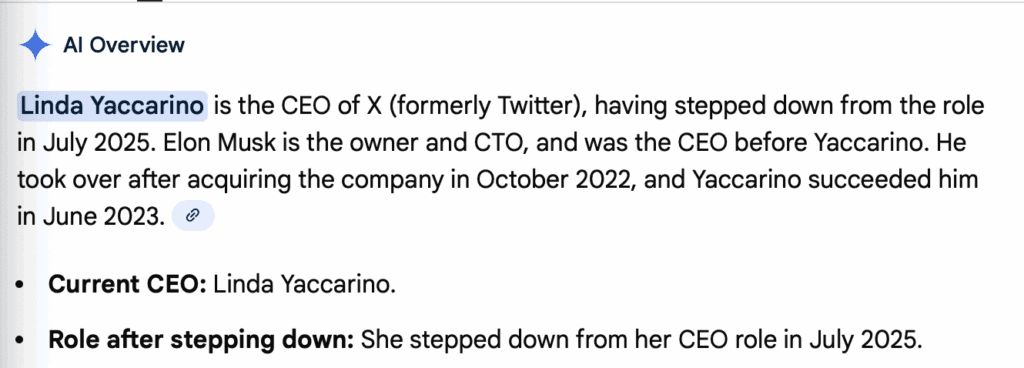
P.S. Elon Musk, who had recently acquired Twitter and become its CEO in December 2022, said then that he would resign as CEO as soon as he found “someone foolish enough to take the job.” That turned out to be Linda Yaccarino, in June of 2023. She lasted two years, until leaving abruptly this last July. Which caused me to wonder, who’s the new CEO of Twitter? Google returned …
RELATED
Burned Out, and Wanting to Talk About It

Felicity Barber Director on the Corporate Communication Team, BlackRock
What Are the Leading Exec Comms Pros Thinking About as We Head Into Fall?

Executive Communication Council
EVENTS
-
How to (Finally) Integrate AI Into Your Exec Comms Workflow
APR 3-4 -
AI for Leadership Communication – Custom Workshop
Get in touch! -
Strategic Speechwriting: The Method and the Art
SEPT 29 - OCT 2 -
Speechwriting School
OCT 26