
A Great Line. But Was It Wise?
November 05, 2026
A speechwriter and a diplomat dares to question the wisdom of this time-honored speech—as you should question your own racy rhetoric.
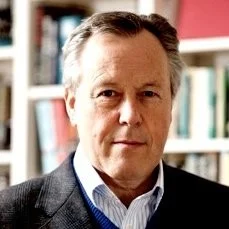
In October I was honoured to join the World Conference of the Professional Speechwriters Association in Washington DC to receive the Grand Award of the 2026 Cicero Speechwriting Awards. I offered some thoughts on what speechwriters and speakers are (and aren’t) “allowed” to do. I drew on this famous example of a speech where fierce arguments about its key passage went to and fro right up the day of delivery.
***
On 12 June 1987 in Berlin President Ronald Reagan delivered one of the twentieth century’s greatest speeches. A full text is here.
And here is the fascinating account by his speechwriter Peter Robinson about the sharp behind-the-scenes disagreements about the speech’s most famous passage that continued up to and including the very day it was delivered.
The wider context? The Cold War seemed to be thawing. Soviet leader Mikhail Gorbachev with his slogans of glasnost and perestroika (‘openness’ and ‘rebuilding’) was winning rave reviews for what looked like sincere moves to normalise relations with Western countries around the planet and scale back nuclear weapons.
Yet Berlin itself was divided by the grim wall erected by communist East Germany in 1961. As President Reagan put it in this speech, that Wall near to where he was speaking was part of “a vast system of barriers that divides the entire continent of Europe. From the Baltic South, those barriers cut across Germany in a gash of barbed wire, concrete, dog runs, and guard towers … a restriction on the right to travel, an instrument to impose upon ordinary men and women the will of a totalitarian state”.
By 1987 the Wall had become a Fact of Life. No-one expected the Soviet Union and Warsaw Pact to collapse. Western leaders typically avoided calling for it to be removed: Soviet leaders would jeer at their ‘provocative’ and ‘destabilising’ rhetoric.
On a recce visit to prepare for the President’s address, Peter Robinson realised that Berliners had not accepted the division of their city and their own families: “If this man Gorbachev is serious with his talk of glasnost and perestroika,” one senior Berlin woman told him, “he can prove it. He can get rid of this wall.” Hmm! Why not make that striking thought the centrepiece of the speech?
This caused consternation in senior Washington foreign policy circles. Such a text was naïve! Clumsy! It raised false hopes! Secretary of State George Shultz himself told Reagan’s team that calling for the Wall to be removed was too tough on Gorbachev.
However, President Reagan himself liked it, not least because it sent a message of hope to East Germans themselves. Driving to deliver the speech he joked that “The boys at State are going to kill me! But it’s the right thing to do.”
And so it was delivered on the day:
General Secretary Gorbachev, if you seek peace. If you seek prosperity for the Soviet Union and Eastern Europe. If you seek liberalization.
Come here, to this gate. Mr Gorbachev, open this gate. Mr. Gorbachev, tear down this wall.
* * * * *
What are we speechwriters to make of that passage now? It made headlines around the world. Its bold public claim for freedom was all the more powerful and moving for being delivered next to the Wall itself. It’s up there with “I have a dream!” in having one of the most recognisable lines from any speech ever. What’s not to like?
What we don’t have are the many rival versions of this passage that swirled around inside the Washington system. How did they try to balance the ideas and possible messages in play?
Peter Robinson does mention one version put forward:
“The draft the diplomat in Berlin submitted contained the line, “One day, this ugly wall will disappear.” What did that mean? That the wall would just get up and slink off of its own accord? … [This] ignored the question of human agency altogether. What State and the NSC were saying, in effect, was that the President could go ahead and issue a call for the destruction of the wall – but only if he employed language so vague and euphemistic that everybody could see right away he didn’t mean it.”
What about the final version itself? Was it infelicitous in some respects?
General Secretary Gorbachev, if you seek peace/prosperity/liberalization …
The ‘if’ here is an odd qualifier. It suggests that Gorbachev is saying all that, but Reagan doesn’t believe him.
Come here, to this gate. Mr Gorbachev, open this gate. Mr. Gorbachev, tear down this wall.
Here Reagan is setting a unilateral test of Gorbachev’s sincerity: only by tearing down the Wall can he prove that he means what he says. It’s all not-so subtly bossy, if not openly condescending?
I yield to no-one in my admiration for Ronald Reagan’s principled steely approach to dealing with Moscow that helped end the Cold War. But as both a speechwriter and former UK diplomat who served in Moscow from 1991-1993, I now wonder whether George Shultz was right. Maybe the formulation Reagan used in Berlin was unnecessarily ‘tough on Gorbachev’ and so played in to a wider Russian feeling that Moscow ended the Cold War ‘humiliated’ (now a frequent Putinist line).
The Soviet Union of course was a monster that richly deserved to be humiliated. But that does not mean that humiliating it (or appearing to do so, or giving openings to the Soviets to claim that that was happening) was the smart thing to do.
Perhaps a different but still bold formulation would have grabbed world headlines but sounded notably less peremptory while putting a strong emphasis on balanced partnership?
General Secretary Gorbachev, we both say that we seek peace, and prosperity for the Soviet Union and Eastern Europe, and general liberalization.
But we have a problem. This ugly Wall is in our way.
It divides this great city. It divides families. It divides nations. It’s dividing us.
Mr Gorbachev, let’s join forces. Let’s open this gate! Let’s tear down this wall!
In short, a speech can be strong. Principled. Have many great lines. Hit the headlines. Move people. Set new agendas. Crash through what’s ‘allowed’. Be remembered for years and decades to come. Win Cicero Awards!
But the deep question remains for those crafting and delivering the words. Is it wise?
***
Veteran speechwriter Charles Crawford has served as the United Kingdom’s Ambassador to Serbia and Poland.
RELATED


Lech Mintowt-Czyz Speechwriter

David Murray Executive Director, Executive Communication Council
EVENTS
-
How to (Finally) Integrate AI Into Your Exec Comms Workflow
APR 3-4 -
AI for Leadership Communication – Custom Workshop
Get in touch! -
Leadership Communication Academy
DEC 2 - 3 -
Leadership Communication Days 2027
FEB 25 - 26